
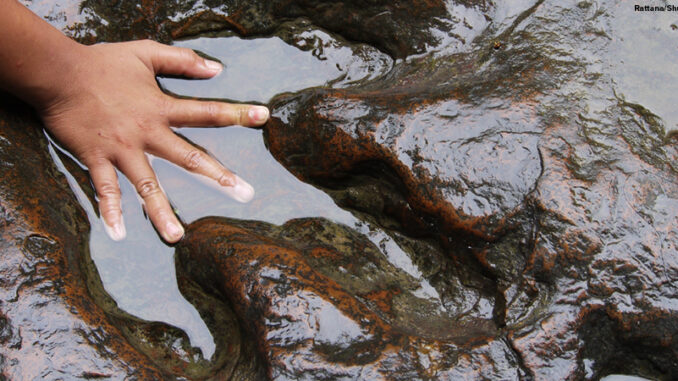
Dinosaur discoveries are always exciting! Sometimes, they reveal a new species that we didn’t know existed. Or they give us new information about how these animals lived and interacted. Toro Toro, Bolivia, is a popular national park and village in the Andes Mountains. It is also the home of more than 16,000 theropod footprints–more than anywhere else in the world. Here, btw takes a closer look at these prints, and what they can teach us about these amazing creatures.
What are Theropods?
Theropods were large meat-eating dinosaurs that lived at the end of the Cretaceous period (about 66 million years ago). The theropod group of dinosaurs includes the infamous Tyrannosaurus rex. Theropods had sharp teeth, walked on their rear legs only, and had claws and hollow, thin-walled bones. They were also the most diverse group of dinosaurs. The theropod group included not only the massive T-Rex, but also species such as Microraptor which were about the size of a modern-day crow.
Less is known about this group than about other dinosaur species, because few good fossil specimens have been found. That’s probably because their hollow, thin-walled bones have broken down more quickly and easily over time. So, discovering well-preserved specimens is much rarer. It makes sense, then, that therapod means “beast-footed,” as it is easier to find the animals’ tracks than their bones.
The “discovery” of 16,600 dinosaur footprints in Toro Toro is not really a discovery. The tracks have always been highly visible. They are receiving public attention now because American scientists have been studying the footprints for six years and have recently released the results of their findings. And the Toro Toro prints are especially significant because this is the highest number of such tracks found anywhere in the world to date.
What We Can Learn
But why are dinosaur tracks important? It’s true that when we think of dinosaur discoveries, we tend to think of fossils. But scientists say that they often can learn even more about a species from footprints than they can from skeletons. For example, they can see how quickly the animal moved, or when it paused or changed direction. In this way, the tracks almost tell a story.
Scientists are able to learn a great deal from the Toro Toro tracks. The huge range in sizes of the footprints shows that dinosaurs more than thirty feet tall travelled together in the same herd with tiny theropods about the size of a chicken. Also, more than a thousand footprints have also been discovered in lake-bottom sediment. This shows that the dinosaurs made attempts to swim.
But the discovery raises questions as well. Scientists are curious why there is such a large number of footprints in this one particular area. It may be that Toro Toro was once the site of a large, freshwater lake, where dinosaurs gathered to drink. It is also interesting that so many tracks have been found, but with no other remains, such as bones, teeth, or fossilized eggs. Part of the issue may be that theropods had hollow, thin-walled bones that didn’t hold up well over time.
It’s also possible that human interference played a role: farming, mining, and construction have all taken place in this area over the years, often with little attention to preservation. It could also be that no other evidence remains because herds of dinosaurs passed through the area but didn’t settle there. Scientists think maybe they were running away from something. But this is a part of the theropod story that hasn’t been solved yet.