
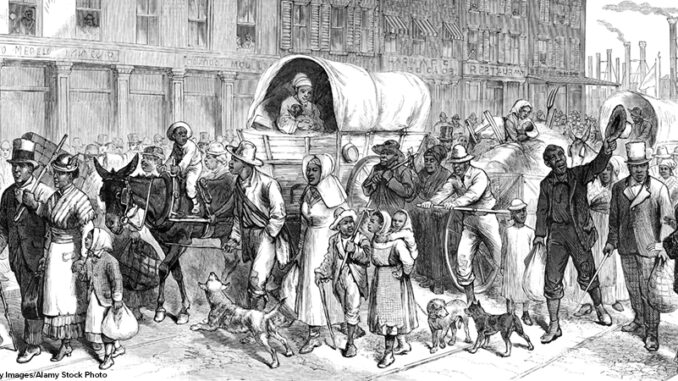
Black History Month is a time to recognize and honor the history, contributions, and legacy of African Americans. This week btw takes a closer look at the Exodusters. They were African American Southerners in the late 1800s who left behind everything they knew for a chance at a better life in the West.
Who Were the Exodusters?
By the 1870s, the American Civil War was over, and many people were struggling to reestablish their lives during peace time. In the South, formerly enslaved African Americans were building new lives for themselves in the face of much discrimination and violence at the hands of white Southerners. Poverty was widespread and many African Americans worked as sharecropping farmers in economic conditions that were not much better than slavery. African Americans were also politically disenfranchised. Though they had been granted citizenship through the Thirteenth Amendment and given the right to vote by the Fifteenth Amendment, white Southerners found many ways, such as poll taxes, to place hurdles before voting.
In response to these conditions, thousands of African American decided to move to the Western states. This mass migration became known as the “Great Exodus,” and those who participated in it were called “Exodusters.”
Why Go West?
The Homestead Act of 1862 declared that anyone who settled in the Western states would be able to purchase 160 acres of farmland for a small fee. Kansas was an especially appealing destination. The Exodusters believed that Kansas, as the home of famous white abolitionist John Brown, would be a place where they could build their lives free of oppression. Kansas was also located geographically closer than other Homestead states, such as California. Over the decade of the 1870s, nearly 27,000 African Americans relocated to Kansas.
The “Kansas Fever” Exodus
Southern African Americans migrated to the West throughout the 1870s. But in the year 1879 alone, about 6,000 African Americans left the South for Kansas. The election of 1878 was a huge victory for Southern Democrats, many of whom opposed the freedoms granted to the formerly enslaved. In addition, newspaper articles published by Exodusters who had already made the move West convinced many Southern Blacks that the time had come to move. This huge migration in 1879 became known as the “Kansas Fever Exodus.”
Reactions
Reactions to the Great Exodus were mixed. African American leaders such as Frederick Douglass argued that it would be better for African Americans to remain in the South, where they held a larger percentage of the population. This gave them a better chance of gaining political power eventually. Douglass and others felt that by migrating to the West, the Exodusters were making things harder for the African Americans who were choosing to stay behind in the South.
Many white Southerners were afraid that Northerners were luring African Americans to their states to gain access to their cheap labor. They urged their elected officials to do something to stop the migration.
People in the North argued that the discrimination of African Americans was what was causing them to leave. In response, in 1879 the Senate passed a resolution to establish a five-member committee to investigate the causes. The committee interviewed 153 Black and white witnesses, but ultimately the committee was divided by political differences and accomplished very little.
Leaders Emerge
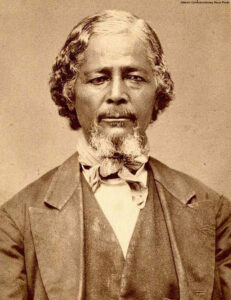
Several new African American leaders emerged from the Exoduster movement, including Benjamin “Pap” Singleton from Tennessee and Henry Adams of Louisiana. Both men were strong organizers and advocates for the Exodusters. They held conventions and established organizations to help fund the Exodusters’ journeys. Leaders like Singleton and Adams became known as “conductors” for their role in helping lead groups of African Americans to Kansas.
Others began organizing in the forming western communities to help care for the newly arrived Exodusters, many of whom had no money and nowhere to live. Committees, formed largely by clergy and local business leaders, helped gather food and funding and provided temporary shelter.