
Black History Month is a time to honor and celebrate the contributions, achievements, and rich history of Black Americans. This week btw spotlights Dr. Walter E. Fauntroy, a prominent civil rights leader and groundbreaking legislator. Fauntroy marched alongside Dr. Martin Luther King Jr. and later went on to fight injustice in Congress and around the world. Here, btw takes a closer look at his legacy.
A Pastor
Walter Fauntroy was born in Washington, D.C., on February 6, 1933. His mother was a part-time seamstress, and his father was a clerk at the U.S. Patent and Trademark Office. He graduated from high school in 1952. His parents couldn’t afford to send him to college, so for a year the local church sold chicken dinners and chitterlings (deep fried pig intestines) to raise enough money. They succeeded, and Fauntroy went on to receive a bachelor’s degree from Virginia Union University in 1955. There, he first met a young preacher named Dr. Martin Luther King Jr. Three years later, Fauntroy also earned a Bachelor of Divinity degree from Yale Divinity School. Fauntroy later became pastor of New Bethel Baptist Church in Washington, D.C.
In his role as a pastor, Fauntroy worked hard to improve conditions for African American families. His devotion to this cause was noticed by Dr. King. In 1961, he appointed Fauntroy director of the Washington bureau of the Southern Christian Leadership Conference (SCLC), where he helped coordinate the 1963 March on Washington.
A Civil Rights Leader
Fauntroy’s contributions to the civil rights movement were numerous. He assisted Dr. King with his famous “I Have a Dream” speech and helped organize the 1965 march from Selma to Montgomery, Alabama. He was also the national coordinator of the 1968 Poor People’s Campaign. Locally, he was the founder and director of the Shaw Urban Renewal Project. This effort worked to restore an historic African American neighborhood in Washington, D.C. His work was also noticed by President Lyndon B. Johnson, who appointed Fauntroy vice chairman of the 1966 White House Conference. The Conference focused on improving the lives of African Americans after the passage of the 1964 Civil Rights Act.
A Politician
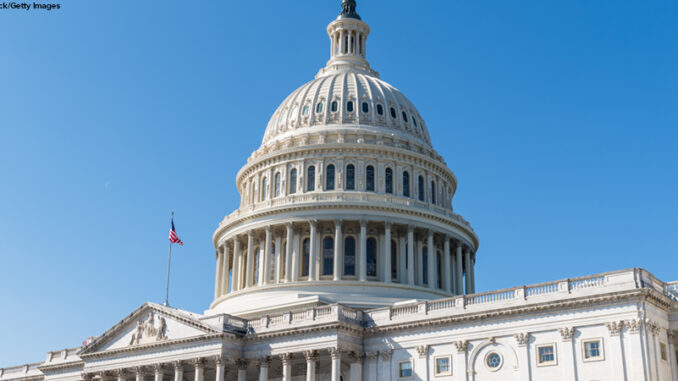
In 1967, Fauntroy began his own political career by serving as vice chair of the Washington, D.C., City Council. In 1970, Congress passed the District of Columbia Delegate Act, which gave Washington, D.C. a nonvoting representative in Congress. Fauntroy won the seat in 1971. He defeated a crowded slate of opponents and becoming the first African American to represent D.C. in Congress.
Though he was elected as a nonvoting member, Fauntroy was still able to introduce legislation and to have a vote in committees. He served in Congress until 1990, largely focused on winning more representation for D.C. residents. He also continued to work on improving conditions for low-income D.C. residents, affordable housing, and anti-drug legislation.
Fauntroy believed that part of his role as a member of Congress was to draw attention to international injustices as well. Because of this, he and several other representatives worked to help fight the policy of apartheid in South Africa, and to address human rights violations in Haiti by offering asylum to more Haitian immigrants.
A Legacy
In 1990, Fauntroy left Congress to run for mayor of Washington, D.C. But his attention to international issues cost him support among local constituents, and he lost by a significant margin. He faced a further setback in 1995, when he served two years of probation for filing a false financial report as a congress member back in 1988. Nevertheless, he continued to serve the people of D.C. for the rest of his career. He remained as pastor of the New Bethel Baptist Church until his retirement in 2009 and continued participating in many community service projects.
Now retired but still living in the University Park area of Washington, D.C., Fauntroy is remembered for his service as a pastor, member of Congress, and civil rights activist.