
Some people believe that artificial intelligence, or AI, is an exciting new frontier for science and humanity. Others are concerned about its negative impact on the environment, employment, and the arts. Demand for this technology is currently outpacing what can be managed by today’s datacenters.
In fact, some scientists estimate that by 2028, AI servers could be using as much energy as 22 percent of all U.S. households. Raising demand for energy will drastically raise energy prices for everyone. Google is offering one possible solution. It is proposing putting AI data centers in space with an innovative project called Project Suncatcher.
What is Project Suncatcher?
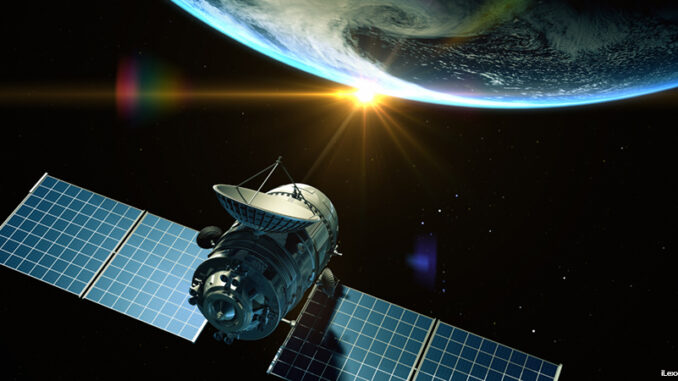
Imagine this: tightly packed groups of satellites, solar-powered and carrying powerful processors (called TPUs) which are specialized for AI. These clusters of satellites orbit the Earth four hundred miles above its surface. They use light or laser beams to transmit information to and from Earth (similar to satellite internet). Scientists say that this could be one feasible way to meet the growing AI demand.
But Why Space?
Theoretically, building a data center in space could be more energy-efficient than building one here on Earth. That’s because they would be powered by solar panels. In space, those panels could produce eight times more energy than they would be on Earth. (Because it’s always sunny in space.) Furthermore, the prices of space launches are falling so rapidly that by the middle of the 2030s, running a datacenter in space may cost about the same as running one here on Earth.
There are several environmental advantages to this idea as well. Building processors on satellites removes the need to use up a lot of land resources. AI datacenters also use a lot of water to cool the high-density AI chips. (A large data center can use up millions of gallons of water every day.) But in space, it’s already cold, so cooling the processors isn’t necessary. Some scientists estimate that Project Suncatcher would emit ten times less carbon dioxide than a datacenter built on Earth.
What Are the Problems?
While there are some environmental advantages to building datacenters in space, there are environmental drawbacks as well. For example, launching a single rocket into space releases hundreds of tons of carbon dioxide into the atmosphere. This would create a significant impact if a rocket needed to be deployed every time the data center needs a repair. Cluttering space with clusters of satellites would also make it difficult for astronomers here on Earth to observe space effectively. It also increases the chance of space collisions. (There are already 10,000 active satellites orbiting Earth, not to mention about 10,000 metric tons of space debris.)
There are also practical barriers. There are several logistics of a space data center that need to be understood. This includes how to maintain the data center’s temperature and transmit information back to Earth effectively. Also, the effects of continual exposure to the Sun’s radiation on the processors are not understood. And someone needs to find a way for the different satellites to communicate effectively with each other, and to control the orbital paths of the satellite clusters.
Looking Ahead
Google plans to send two test satellites into orbit as soon as early 2027, to examine how well the satellites’ function and communicate. They will also observe how the TPU hardware operates in space.