
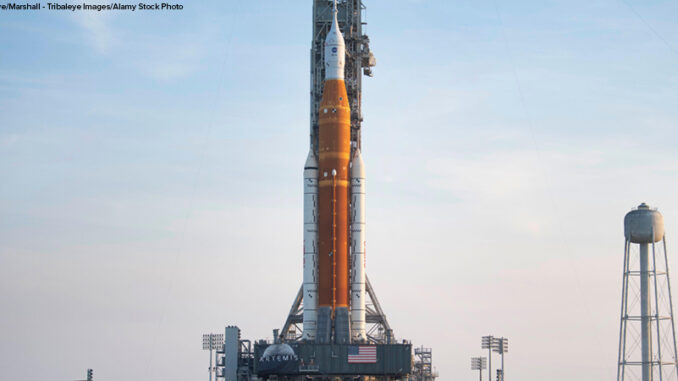
On July 20, 1969, human beings first walked on the Moon. Now, the ten-day Artemis II mission will take humans to the Moon again for the first time in more than fifty years. Here, btw takes a closer look at this historic mission.
Meet the Crew
The commander of the four-person Artemis II mission is Reid Wiseman, a Navy test pilot. The rest of the crew includes Victor Glover, another Navy test pilot; Christina Koch, a NASA astronaut and engineer; and Jeremy Hansen, a fighter pilot.
The crew is historic for several reasons. Glover will be the first African American to travel to deep space. Koch will be the first women to travel outside of the Earth’s orbit. And Hansen will be the first non-NASA astronaut to participate in a lunar mission (Hansen is a Canadian Space Agency astronaut).
The Itinerary
The Artemis II mission launched successfully from the Kennedy Space Center in Florida on the evening of April 1, 2026. The trip is scheduled to last for ten days. Day 1 involved leaving Earth’s orbit. This was also the time for the astronauts to test all the critical systems, such as the water systems and carbon dioxide filters, while still relatively close to Earth.
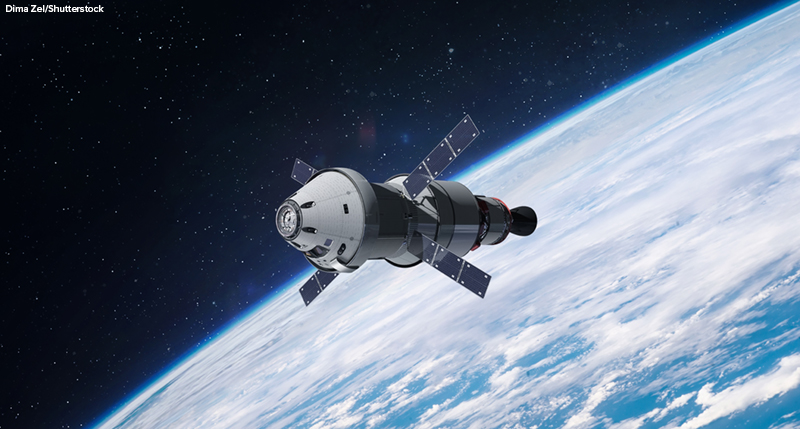
Days 2 through 5 were spent traveling to the moon. On Day 2, the astronauts tested the workout equipment and communicated in a space to ground video communication. Day 3 was spent testing first aid procedures in space and testing the spacecraft’s emergency communications system. On Day 4, the astronauts devoted time to reviewing the geographic targets they would be looking for during the Orion spacecraft’s flyby of the Moon on Day 6. There was also time set aside for taking pictures of space through Orion’s windows. On Day 5, Orion entered the lunar sphere of influence: the point at which the gravitational pull of the Moon becomes stronger than that of Earth. The astronauts used this time to test their new spacesuits. If necessary, these suits can provide them with a breathable atmosphere for up to four to six days.
On Day 6, the crew began its lunar flyby and reached its maximum distance from Earth. The spacecraft came within 4,000 to 6,000 miles of the Moon’s surface, and the astronauts spent that time observing, photographing, and recording their findings. They also lost communication with Earth for thirty to fifty minutes as they passed behind the Moon.
The Orion crew returns home on Days 7 through 10. On Day 7, Orion will exit the lunar sphere of influence. Other than that, it will mostly be a day of rest. More experiments are scheduled for Day 8, especially concerning radiation. The crew will have to perform an exercise where they use Orion’s supplies and equipment to build a radiation shelter. Day 9 is Orion’s last full day in space, and the crew will begin conducting procedures for reentry and splashdown. On Day 10, the spacecraft will reenter the Earth’s atmosphere, facing temperatures of up to about 3,000 degrees Fahrenheit. Orion will splash down in the Pacific Ocean, where scientists and military personnel will be waiting to welcome the crew back to Earth.
Why It Matters
The Artemis II crew has already set a record for the farthest distance ever traveled from Earth by humans. (The current record is 248,655 miles, set by Apollo 13 in 1970.)
The Artemis II mission is not about landing on the moon. The Orion spacecraft isn’t a lunar lander, so it doesn’t have the capability to. NASA explains that this mission is about testing the best ways to keep humans safe and healthy in space: how to keep temperatures and moisture levels stable, supply adequate food and water, and provide toilets and exercise facilities. In other words, Artemis II is about setting the scene for future human missions to space–maybe even another walk on the Moon. NASA hopes to take astronauts back to the lunar surface in 2028.