
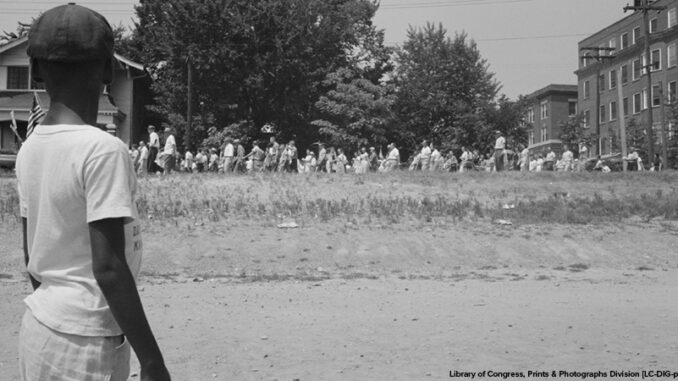
February is Black History Month: a time to recognize, honor, and celebrate the history, culture, and contributions of Black Americans. This week, btw takes a closer look at a group of African American teenagers from the 1950s, known as the Little Rock Nine. These students overcame adversity and helped changed the face of public education in the United States.
Who Were the Little Rock Nine?
Imagine wanting to go to school so badly that you would go even if people stood in your way, threw things at you, called you terrible names, and threatened to kill you. That’s what happened to a group of students known as the Little Rock Nine. These students attended racially segregated public schools. Segregation is the practice of keeping groups of people legally separated. Until 1954, Black students and white students attended separate public schools across the United States. But that year, a U.S. Supreme Court case known as Brown v. Board of Education of Topeka outlawed segregation in public schools. The process of ending segregation is called integration.
In Little Rock, Arkansas, it wasn’t until 1957 that African American students first attempted to enter a white high school. These students were volunteers from the local all-Black junior high and high schools. They had been told that if they transferred to Central High School, the all-white school, they would not be allowed to participate in sports or extracurricular activities. They would not be allowed to attend school events, such as basketball games or the prom. Many of their parents were also threatened with job loss.
Nevertheless, nine brave students–Minnijean Brown, Elizabeth Eckford, Ernest Green, Thelma Mothershed, Melba Pattillo, Gloria Ray, Terrence Roberts, Jefferson Thomas, and Carlotta Walls–made the important choice to become the first African American students to join Central High School.
What Challenges Did They Face?
This change caused a dramatic reaction in the Little Rock community. Many white residents did not want integration of schools. They responded with anger and violence. On September 2, 1957, the night before the nine African American students were scheduled to enter Little Rock’s Central High School for the first time, the state’s governor, Orval Faubus, ordered soldiers from Arkansas’ National Guard to block their entrance.
The new students didn’t go to school that day. They tried again the day after: September 4. This time, a federal judge had ordered that they be allowed to enter the building. But National Guard soldiers and an angry mob of local citizens once again blocked their entrance.
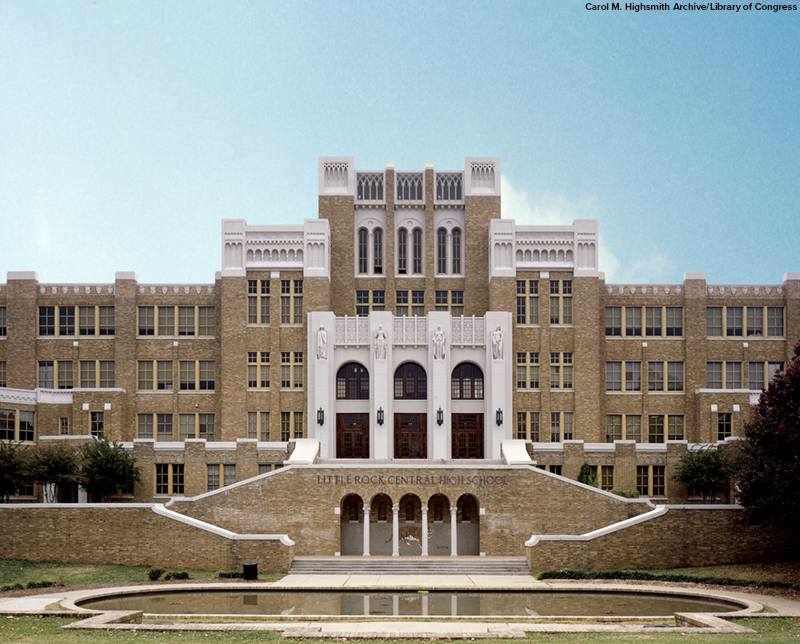
On September 23, 1957, the group of students–now called the “Little Rock Nine” by the media–attempted yet again to enter the school building. This time, they were escorted by local police into a side entrance. But the angry mob was back. When they couldn’t block the students’ entrance, they tried to push their way into the school. After about three hours, school officials sent the Little Rock Nine home, saying that they were worried about their safety.
Finally, on September 25, 1957, President Dwight Eisenhower sent federal Army troops to guard the students and escort them into the building. The Little Rock Nine was able to start regularly attending classes. Soldiers accompanied them to classes and to the restroom. But even so, their path was not easy. Many of the white students continued to bully, threaten, and harass them. Any white students who supported the Little Rock Nine received the same treatment. Nevertheless, the following spring, Ernest Green became the first African American student to graduate from Little Rock’s Central High School.
What Was Their Impact?
The following school year, all of Little Rock’s high schools were closed to prevent further integration. But the Little Rock Nine all graduated from high school. Many of them went on to have illustrious careers and to receive some of the nation’s highest awards and honors. Perhaps even more importantly, they drew worldwide attention to the cruelty of segregation and helped to ensure fair access to education for generations to come.