
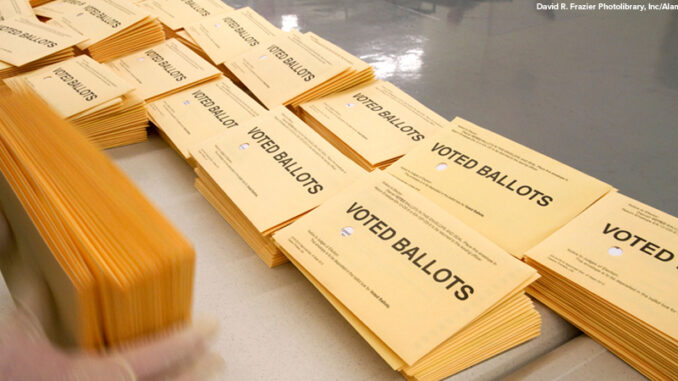
President Trump has made concerns about voter fraud a highlight of his administration. Over the past few months, the president has used executive orders calling for several new restrictions on mail-in ballots. With the November midterm elections rapidly approaching, the Supreme Court earlier this month rejected the Trump administration’s plan.
Why Mail-In Ballots?
Mail-in ballots account for nearly a third of all votes cast in U.S. elections. According to the Trump administration, these mail-in ballots are often fraudulent because people can vote pretending to be someone else. Therefore, supporters of these reform efforts say that these restrictions are just a common-sense measure to make sure that everyone votes legally.
However, there has been no evidence of any significant fraud with mail-in ballots. A 2025 study done by the Brennan Center showed that mail voting fraud occurred in only about four out of every ten million mail-in ballots cast. In fact, Trump himself has voted with a mail-in ballot at least three times. He did so this year, when he voted by mail in Florida’s Republican primary.
What Was the Proposal?
The Trump administration’s March executive order required the US Postal Service (USPS) to adopt a certain envelope style with a special bar code for mail-in ballots. This would allow the ballots to be tracked. The executive order also stated that the USPS would be given a list of eligible voters by the federal government. If a person’s name was not on that list, the USPS would not be permitted to deliver them a ballot. Twenty-three Democratic-led states and voting rights groups immediately sued the Trump administration for illegally interfering with the election.
What Was the Opposition?
Those opposed to the executive order argued that it changed the rules of voting much too close to Election Day and that states would not be able to pivot to this new system in time. Several states have already begun sending out their mail-in ballots under the old rules. If the rules changed, those votes would have to be thrown out. That’s a significant problem, especially for the eight states that vote entirely by mail (California, Colorado, Hawaii, Nevada, Oregon, Utah, Vermont, and Washington).
Additionally, many question if it is legal to limit voting by mail in the first place. According to the U.S. Constitution, the president does not have the right to set or change election rules. The Trump administration, however, has argued that since the White House controls the U.S. Postal Service, it has the authority to enact these changes.
What Was the Outcome?
On September 14, 2026, the Supreme Court rejected Trump’s request to restrict mail-in ballots for the midterm elections. This means that states can continue sending out mail ballots using the same procedures and deadlines as always.
However, the Court implied that while they were opposed to these restrictions being added for this year’s midterm elections, they might not oppose similar restrictions in the future.
How is this debate over voter fraud affecting the American voting public? Despite no clear, impactful evidence of fraud in mail-in voting, 18 percent of Democrats and 70 percent of Republicans say that they believe there is a good amount of fraud when people vote by mail.