
In early January 2026, President Trump ordered military action in Caracas, Venezuela, in order to capture the nation’s president, Nicolas Maduro. In the days that followed, the Trump administration took control of Venezuela’s government and its oil industry. Many U.S. legislators have criticized these events, saying that the proper constitutional methods to invade another country were not followed. Supporters say that the president can make these decisions as the commander-in-chief of the military.
What Does the Constitution Say?
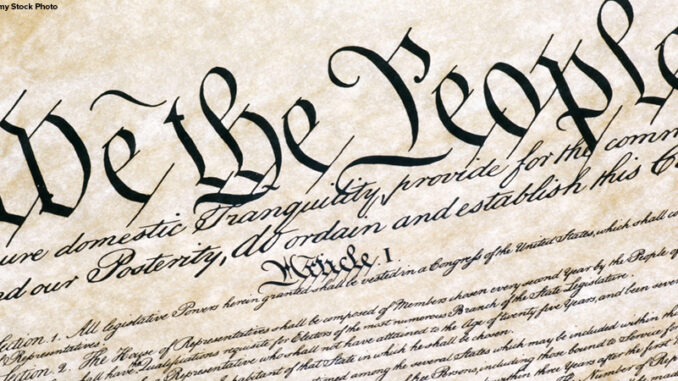
According to the U.S. Constitution, the authority to declare war is shared between the president and Congress. Article I says that Congress has the right to raise and support the military, and to declare war. In fact, this is one of the principal roles of Congress. But Article II of the Constitution states that the president is the commander-in-chief of U.S. armed forces.
Despite having the authority to do so, the U.S. Congress has not declared war since entering World War II. Since then, presidents have mostly used their powers as commander-in-chief to direct military action and use military force against other countries without officially declaring war.
The War Powers Resolution
The War Powers Resolution was passed by Congress in 1973. President Nixon tried to veto the legislation, but Congress overrode his veto. This law was largely a response to Nixon entering U.S. troops into Vietnam, Laos, and Cambodia without Congressional approval. Its goal was to emphasize the role of Congress in declaring war, while still giving the president the flexibility to respond quickly to aggression if needed. It defines presidential reporting requirements, as well as the official parliamentary process that must be followed to declare war.

The War Powers Resolution (WPR) requires that the president reach out to Congress before engaging U.S. forces abroad. If the president deploys U.S. forces without Congressional approval, such as in a situation of self-defense, the president must report to Congress within the first 48 hours of deployment, and at least every six months after that, if the troops are engaged. After six months, unless Congress has officially declared war or authorized the use of U.S. troops, then U.S. military forces are automatically withdrawn from the conflict. If necessary, the president can extend this window by 30 days, but they must submit an explanation in writing to Congress.
Trump’s Response
In response to criticism that Trump has violated the War Powers Resolution by not seeking Congressional approval to invade Venezuela and capture President Maduro, Trump stated that the War Powers Resolution is unconstitutional and violates Article II of the Constitution.
Trump is not the first president to question the constitutionality of the WPR. In fact, nearly every president since 1973 has been accused of violating it. In 1950, President Truman involved U.S. troops in a United Nations military action against North Korea without Congressional approval. Truman stated that he believed this was acceptable because there was no official declaration of war. President Clinton used military force in Haiti and Bosnia without Congressional approval. The George H.W. Bush administration entered war with Iraq and stated that the president had the authority to do this without the approval of Congress under Article II of the Constitution. And in 2011, President Obama did not have Congressional approval to begin a seven-month-long air strike of Libya.