
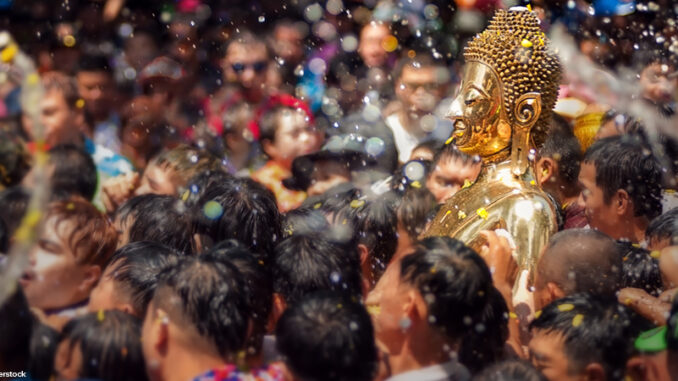
Happy New Year! The people of Thailand recently celebrated the annual New Year’s festival that began on April 13. Here, btw takes a closer look at Songkran, the traditional Thai New Year festival.
What is Songkran?
In Thailand, the New Year isn’t based around the monthly calendar the way it is in many other parts of the world. Instead, it is based on the Zodiac and the movement of the sun. The word Songkran comes from a phrase in Sanskrit that means “passage of the sun.” In mid-April, the sun passes into the Aries constellation, which is the first sign of the Zodiac. So this is when the new year is celebrated. This also happens to occur just after the rice harvest, giving people extra reason to celebrate and enjoy time with their families.
How Do They Celebrate?
In the United States, New Year’s celebrations often involve noisemakers, confetti, and countdowns to midnight. Maybe your family also has special traditions or food around this holiday. In Thailand, Songkran is about three days long, though in some cities it might last even longer. (In Bangkok, the nation’s capital city, the celebration goes on from April 9 to April 15.) People celebrated Songkran with many traditions, including games, music, plays, and food.
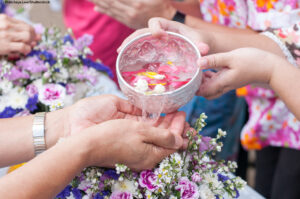
Songkran is about making a fresh start. Water plays a very important role. Pouring water signifies washing away the past year to prepare for the new one. It offers a symbolic cleansing and washing away of misfortune. If you were celebrating Songkran, you might splash water on your family and friends or bathe a sacred Buddha image. Children also often pour water on the hands of elderly family members to show respect.
What is Songkran Like?
During Songkran, people symbolize the fresh start to the year by cleaning their houses, offices, and schools. Most people, including children, also get up early in the morning to visit Buddhist temples. The temples are decorated with colorful flags and flowers. Many people bring sand to the temple, which they leave in little piles, called stupas, on the ground. They do this to replenish the sand that is carried away during the rest of the year by the shoes of visitors to the temple.
But Songkran is also about having fun. In some cities there are street parties at night, full of loud music and playful water balloon fights. In others, there might be free concerts, parades, performances, and late-night beach parties. In Chon Buri, a coastal province near Bangkok, Songkran is celebrated until April 19 and includes the tradition of building huge pagodas out of sand.
As with holidays anywhere in the world, food is also a big part of Songkran. Hundreds of years ago, a special jasmine-scented rice dish called Khao chaeem was served to the royal family, along with fried, salted beef and vegetables. Today, many families and restaurants in Thailand still carry on this tradition.
Why Is It Important?
While Songkran celebrates the start of a new year, it is deeply rooted in gratitude, kindness, and joy. Family is a very important aspect of Songkran. During this time, people pay respect to older family members and ancestors. Parents and teachers pass down the astrological knowledge around Songkran to the children. The celebration places a great emphasis on the importance of family and community, and the sense of unity it provides can help people who might be struggling with feelings of loneliness or isolation.
The Songkran holiday is celebrated across much of Southeast Asia, including Laos, Cambodia, Myanmar, Vietnam, and parts of India and China. While each region observes its own traditions, all are centered around the importance of family, community, and a fortunate start to the new year.