
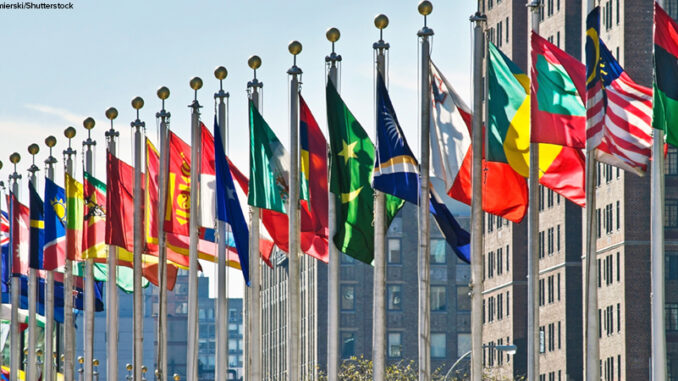
Wednesday, March 25, 2026, was the International Day of Remembrance of the Victims of Slavery and the Trans-Atlantic Slave Trade. On this day, the United Nations General Assembly voted to adopt a resolution calling for countries that participated in the Trans-Atlantic slave trade to pay reparations as a step toward addressing that wrongdoing. Here, btw takes a closer look at that resolution and what it means.
What Are Reparations?
The term “reparations” comes from the word “repair.” Reparations are meant to acknowledge past wrongdoing and serve as a step toward trying to make up for it. Often, reparations can be symbolic, such as a memorial or commemoration. Other times, such as with the recent United Nations resolution, the reparation involves a formal apology, and the payment of money or land.
The idea of reparations has been discussed in the United States almost since the slave trade ended. In 1894, a bill introduced in the U.S. Senate would have granted direct payments of $500 to all ex-slaves, plus a monthly pension of between $4 and $15. However, this and several other similar bills died in congressional committees. The idea was revived in the 1960s, when Black-led groups such as the Student Non-Violent Coordinating Committee demanded $500 million from American churches and synagogues for the role they played in enslavement.
In the 1980s, the U.S. government did make reparations to two other groups. In 1980, the Supreme Court ordered the federal government to pay $122 million to eight Lakota Native American groups to make up for illegally seizing their land. And in 1988, Congress agreed to pay $1.25 billion to the 60,000 survivors of the Japanese prison camps during World War II.
What Does the UN Resolution Say?
The UN resolution was spearheaded by Ghana and calls the Trans-Atlantic slave trade the worst crime that has ever been committed against humanity. An estimated thirteen million African men, women, and children were enslaved during this period of time which lasted from the sixteenth through the nineteenth centuries. Most of the enslaved people came from central and western parts of the African continent and were sold by slave traders to the North and South American colonies. Once they were forced to migrate across the ocean, enslaved people and all of their future offspring were treated as property. Enslaved people were often sold at markets and forced to labor on farms, in construction, and as house servants. They were denied all basic human rights.
The goal of reparations would be for countries to formally apologize for their role in the slave trade, and to make payments that could be used to help eliminate inequalities that continue to exist today. The resolution also requires countries to return cultural artifacts, documents, artwork, and other important items to their countries of origin.
What Was the Outcome?
The vote was 123-3. The three countries to vote against the resolution were Argentina, Israel, and the United States. The European Union, which includes 27 countries, abstained from voting. The U.S. ambassador, Dan Negrea, said that while the United States recognizes that slavery was wrong, it should not be required to pay reparations because the slave trade was legal at the time.
UN General Assembly resolutions are a reflection of how the world feels about a particular issue. However, they are not legally binding. In other words, the United States will not be forced to pay reparations for slavery because of this resolution.