
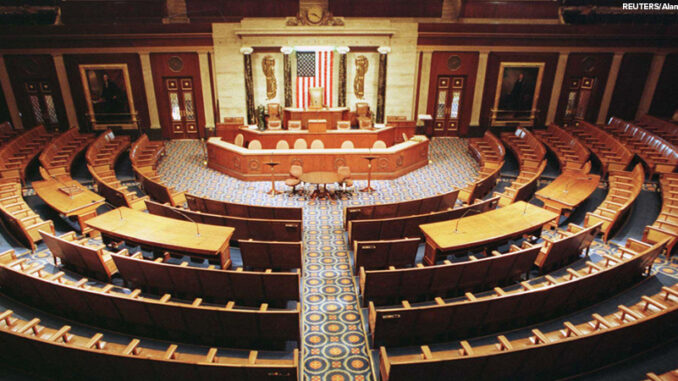
Next week is Election Day! On Tuesday, November 3, 2026, U.S. citizens go to the polls to vote for governors, senators, congresspeople, and other political issues. These midterm elections will impact the direction of our local, state, and federal government. It could tip the current balance of power in Washington, D.C. The current minority Democratic Party is planning its top political priorities if the election results swing in its favor.
What is the Current Situation in Congress?
Currently, Republicans control all three branches of government: the presidency, both houses of Congress, and the Supreme Court. In the House of Representatives, however, Democrats only trail Republicans by five seats (219 to 214), with two seats vacant. This means that Democrats need to win three seats in the midterm elections to regain control of the House. Democrats have not had control of the House of Representatives since 2023, so they are viewing this election cycle as an opportunity for change.
100-Days Agenda
Democrats in the U.S. House of Representatives have been working for months on developing a plan for their first 100 days in power –if the midterm election results are favorable to its Party. Rep. Hakeem Jeffries of New York is the Minority Party member in the House. He is likely to become the next Speaker of the House should Democrats regain control.
The major emphasis of the 100-Days plan is economic affordability. Several months ago, Rep. Jeffries established work groups, or informal committees, to study the major aspects of affordable living: healthcare, housing, groceries, gas and utilities, and childcare. Each of these work groups is headed up by two Democrats. Some of the possible legislation proposed by these work groups include:
- The “Fair Minimum Wage Act” and the “CEO/Employee Pay Fairness Act” to protect America’s workers
- The “Paycheck Fairness Act” to ensure that everyone receives equal pay for equal work
- The “Bank on Students Emergency Loan Refinancing Act” to help families fund access to higher education by increasing Pell Grants and refinancing college loans to lower rates.
Democrats also plan to reinstate Affordable Care Act tax breaks, which expired in 2025 and left many Americans paying more for health care. Democrats also want to reverse Republican-led cuts to Medicaid.
A secondary goal is ending policies started by President Trump. This includes the tariffs of foreign imported good and trying to end the war with Iran.
How Effective Will They Be?
Some critics have expressed concern that the Democrats could face a possible hurdle going forward: division within their own party. There are several representatives who consider themselves to be more progressive than the party overall, and who align more closely with the Democratic Socialists of America. Some fear that these different philosophies will slow the Party’s attempt to unite on an action plan. But Democratic leaders say that this is not the case, and that though they may sometimes differ in their approaches, all Democrats share a common agenda for change.
How much of their agenda the Democrats would be able to accomplish depends entirely on the size of their majority. Also, if the House flips but the Senate remains Republican-led, the power of House Democrats will be limited regardless.