
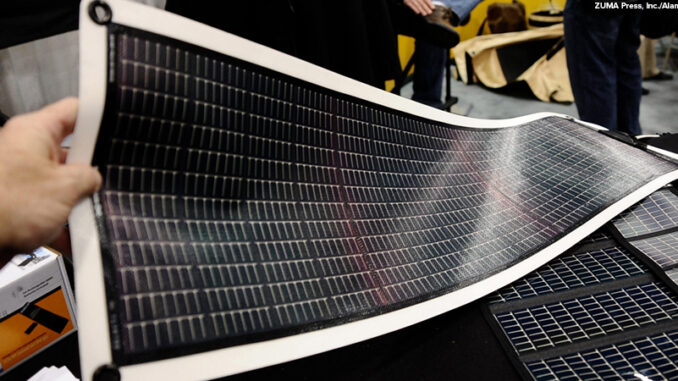
On the news, we often hear about disasters that create widespread homelessness and displacement. We also hear about groups that provide humanitarian aid in these situations. When you think about humanitarian aid, what do you imagine? You might list important supplies such as food, water, blankets, and bandages. But what about electricity? There is a growing emphasis on providing solar panels to refugees around the world to help them easily and affordably meet their electricity needs, with important consequences.
Why Solar?
Electricity is essential for everything from light and heat to communication. But it is also becoming increasingly expensive. Solar panels provide refugees with electricity in an affordable way. Refugee families are given portable solar kits that can be packed and moved from place to place. This removes dependence on the electrical grid. These kits are free and allow families to charge their phones, cook, run fans, and power lights so that their children can study. On a larger scale, they can also be used for essential community-wide tasks, such as powering water filtration systems or running health clinics.
The importance of affordable solar goes far beyond what it can provide to individual households. The United Nations has declared equal access to electricity to be an important aspect of sustained development and global prosperity. In their 2015 Sustainable Development Goals, the UN established that one of its main missions is to eradicate “energy poverty.” This describes a lack of access to reliable, sustainable modern energy. Worldwide, a lack of access to energy is tied to malnourishment, unhealthy living conditions, and limited access to education and employment. It also impacts agriculture and manufacturing needs. Social and economic development is not possible without widespread access to energy.
Currently, when they don’t have access to energy, many refugee families and families in poor areas will rely on unsafe methods such as kerosene, generators, torches, and candles, which are dangerous and pollute the environment.
The Changing Economics of Solar Power
Until recently, solar energy was rare and expensive. Plus, it was new, so humanitarian organizations had to find ways to distribute them, sometimes in dangerous areas. The programs were often dependent on outside funding sources, which sometimes dried up or disappeared altogether. Solar technology has developed so much that it has become much more affordable. Also, mindsets have changed, with people around the world viewing the benefits of solar power as a viable energy alternative.
Even so, in places where demand is high, it can take a very long time to gather the funding needed to supply enough kits. In war-torn Ukraine, for example, thousands of kits have already been distributed, but about 20,000 families are still on the waiting list for one.