
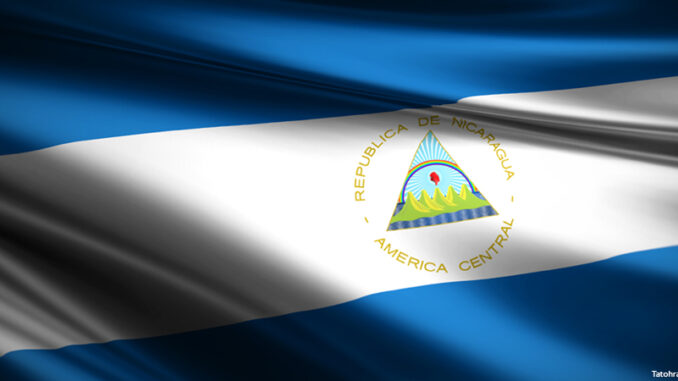
In the United States, term limits control how long a president can be in office. According to the Constitution’s Twenty-second Amendment, a president can serve no more than two four-year terms. This isn’t the case in every country. In Nicaragua, for example, President Daniel Ortega has served (alongside his wife, Vice President Rosario Murillo) for almost twenty years. In July 2026, President Ortega announced that he plans to continue his role, effectively cancelling elections slated for next fall.
Who is Daniel Ortega?
Ortega came to power in 1979, when Nicaragua’s totalitarian government was overthrown by the Sandinistas, a democratic socialist political party. The Sandinistas, under Ortaga’s leadership, remained in power until they were voted out in 1990. Ortega returned to the presidency in 2007 and has been there ever since. This is despite violent and deadly public protests in 2018, when hundreds were killed for protesting Ortega’s regime. Since Ortega won back the presidency in 2007, he has also gained control of all branches of Nicaragua’s government and has even rewritten the country’s constitution. An election was held in 2021, but Ortega put all of his opposing candidates in jail and declared himself the winner.
Before Ortega’s speech in July, the people of Nicaragua had high hopes that an election might occur next year. This was because in January 2025, Nicaragua’s Congress voted to extend the five-year presidential term by one year. That required Ortega to run for reelection in November 2027. But Ortega’s remarks indicate that he has no plans to participate in an election next year. In fact, he stated that the country will not hold elections again. . . ever.
Due to these abuses of power, Ortega’s presidency is not recognized as a legitimate government by the United States and many other international groups.
Why Has He Remained in Power?
The U.S. Constitution protects a citizen’s right to protest when they are unhappy with the government. But in Nicaragua, people who protest Ortega’s regime are jailed or even killed. In 2018, a protest began when the government decided to cut social security benefits. These protests killed at least 325 people, many of them students. More than two thousand people were injured, hundreds were jailed and tortured, and more than 52,000 were exiled from the country. Beginning that year, the government instituted a policy that anyone opposing the government would be jailed, exiled, or killed.
Today, though Ortega denies holding political prisoners, international human rights groups disagree. In 2023, Nicaragua released more than two hundred political prisoners (activists, journalists, religious leaders, and candidates who opposed Ortega) to the U.S. This was done after removing their Nicaraguan citizenship and stripping them of all of their belongings. It is estimated that at least 46 political prisoners are still being held in Nicaragua. Thousands more have fled the country.
In recent years, the Ortega presidency has shut down more than 5,000 organizations. Many of them were religious, but some were simply service groups (such as rotary clubs or scouting). The government has also shut down universities, churches, and the independent media. Most recently, the Ortega regime has revoked the licenses of hundreds of lawyers, leaving people with no legal recourse for dissent.