
If you have traveled to Washington, D.C., the nation’s capital city, you may have visited landmarks such as the White House, the National Mall, a Smithsonian museum, or Arlington Cemetery. But one place that you can no longer visit is Queen City.
This thriving all-Black community was destroyed in the early 1940s to make room for the massive Pentagon building that is the headquarters of much of the nation’s military and defense administration. Today, all that remains of Queen City is an art installation and the stories of its former residents.
What Was Queen City?
In the early twentieth century, just outside Washington, D.C., there was an all-Black community called Queen City. Over 900 people lived there. There were Black-run businesses, churches, stores, a fire department, and other parts of a community. Queen City itself had a rich history. It began when people who had been enslaved at Mount Vernon, the home of George Washington, built a mansion called Arlington House. After the Emancipation Proclamation of 1863, the federal government established a place called Freedman’s Village on the Arlington House property.
At Freedman’s Village, formerly enslaved people learned to read and write, bought property, and started businesses. It was home to abolitionist Sojourner Truth for a year and a half, and Frederick Douglass was a frequent visitor as well. The federal government closed Freedman’s Village by 1900. Many of the residents moved two acres down the road to property owned by the Mount Olive Baptist Church. This new community became known as East Arlington, and within it, the all-Black village of Queen City.
Where Did It Go?
In the 1940s, with World War II dominating much of the government’s focus, the United States needed a new military headquarters. The federal government used its power of eminent domain to purchase the land that contained Queen City from Arlington County in September 1941. (Eminent domain is the right of a government to pay private property owners and then use that land for a public purpose.)
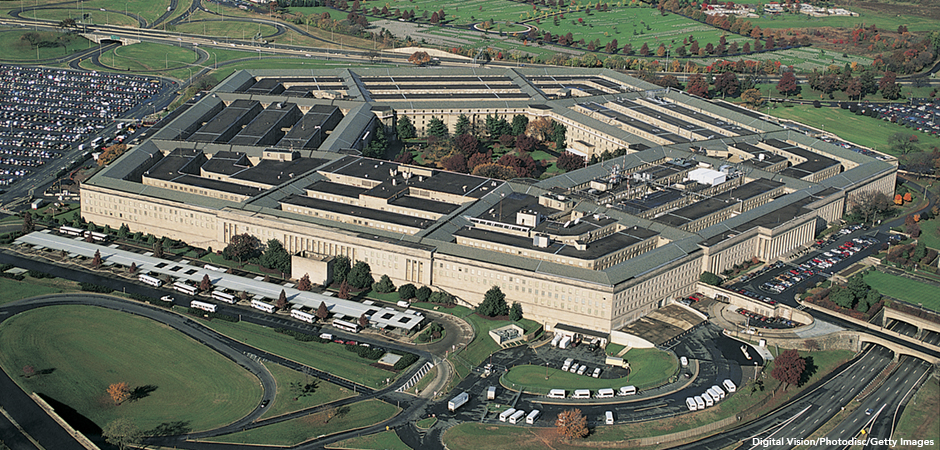
Construction soon began on what would become The Pentagon. Five months later, Queen City residents were told that they would need to relocate their homes so that the land could be used to construct roads and parking lots for the new military headquarters. They were given only weeks to find new places to go, and then their houses were burned to the ground.
What Happened to the Residents?
Queen City residents hired a lawyer to represent them. In response, First Lady Eleanor Roosevelt ordered the construction of a temporary camp made up of trailers. But the camp was overcrowded and only provided one common bathroom. Eventually, residents were moved to another trailer camp. Finally, the federal government built simplified homes for the residents. But many who had once called Queen City home left the area altogether, never to return.
Remembering Queen City
Most Americans no longer remember what happened on this land. In 2023, to draw attention to the displacement of Queen City residents, an artist named Nekisha Durrett created an art installation as a memorial to the forgotten village. The memorial is a 35-foot tall, brick tower. The memorial is jug-shaped and is meant to resemble a well, since Queen City residents had no running water.
On the tower’s interior there are 903 glazed ceramic “drops” of blue, green, and brown. These ceramic drops represent the 903 people who were displaced by the destruction of Queen City. The ceramic drops were created by seventeen Black artists from Washington D.C. and ten states. This was an intentional effort by Durrett to help ensure that the displaced residents of Queen City are never forgotten again.